guide
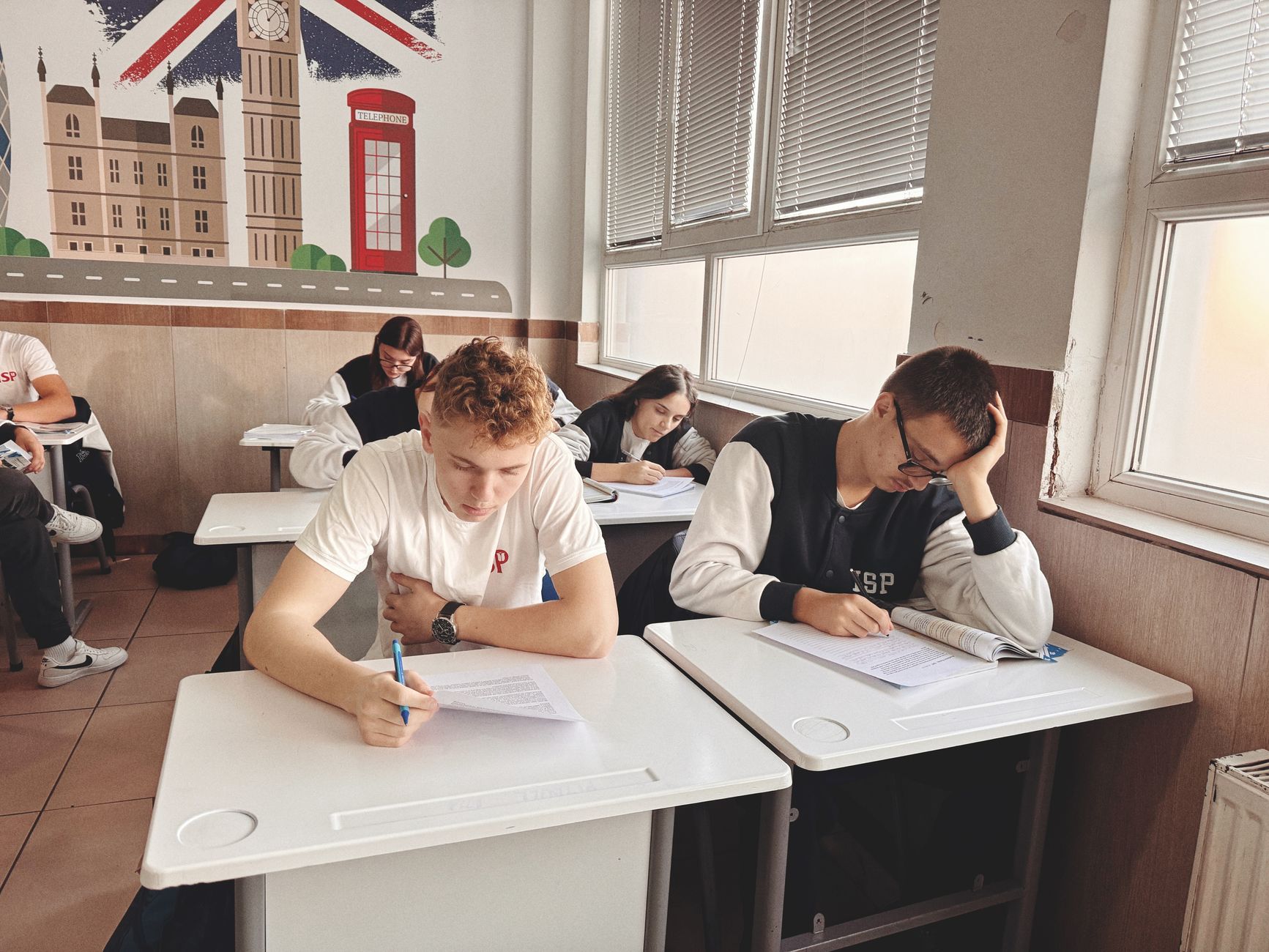
If you've started researching private schools in Canada, chances are you've come across the letters "IB" more than once. The International Baccalaureate is one of the most recognized and respected curriculum frameworks in the world — but for many parents, it can also feel like a maze of acronyms, unfamiliar grading scales, and lofty educational philosophy. What does it actually mean for your child's daily life? Is it really as stressful as people say? And is it the right fit?
This guide cuts through the theory and gets practical. We'll walk you through the four IB programmes and what grades they cover, what a typical school week looks like for an IB student, how grades are calculated and what they mean for Canadian university admissions, and what you can do at home to help your child thrive. Whether your child is in Grade 2 or Grade 11, this guide will help you make a confident, informed decision.

The IB isn't a single program — it's a continuum of four distinct programmes designed to take a student from early childhood all the way through to university entrance. Understanding which programme applies to your child's age group is the essential first step.
The Primary Years Programme (PYP) is designed for students aged 3 to 12 (roughly Junior Kindergarten through Grade 6). Rather than teaching subjects in isolation, the PYP uses an inquiry-based, transdisciplinary approach. Students explore big ideas — called "Units of Inquiry" — that connect subjects like science, language, and social studies into a cohesive learning experience. It's less about rote memorization and more about asking questions and making connections.
The Middle Years Programme (MYP) spans ages 11 to 16 (Grades 6 through 10) and bridges the gap between the PYP and the more academically demanding senior programmes. The MYP emphasizes real-world application of knowledge and requires students to complete a Personal Project in Grade 10 — an independent, self-directed project that develops research, planning, and communication skills.
The Diploma Programme (DP) is the most well-known IB offering and runs across Grades 11 and 12 (ages 16–19). This is the programme most directly relevant to Canadian university admissions. Students take six subjects, complete a 4,000-word Extended Essay, engage in Creativity, Activity, Service (CAS) hours, and study a unique course called Theory of Knowledge (TOK). It is rigorous — and intentionally so.
Finally, the Career-related Programme (CP) is a newer offering also at the senior level, designed for students who want to combine IB academic coursework with practical career-focused learning. It's an excellent option for students who are vocationally oriented but still want the credibility and challenge of an IB qualification.
Our AI consultant can help you narrow down options based on your child's unique profile. Answer a few questions and get matched with schools that truly fit your family.
One of the most common questions parents ask is: "What is my child's day-to-day life going to look like?" The honest answer is that it depends on the programme — but across all four, certain rhythms are consistent.
For a PYP student in, say, Grade 4, a typical week might involve deep dives into a central theme — perhaps "How the World Works" — through activities that span art, science writing, and mathematics. There's less homework than you might expect at this level; the emphasis is on in-class engagement, discussion, and collaborative projects. Parents often notice their children asking more questions and making surprising connections between ideas.
For a DP student in Grade 12, the week looks considerably more structured and demanding. A typical week might include six subject classes (a mix of Higher Level and Standard Level courses), a TOK seminar, independent work on their Extended Essay, and CAS commitments like volunteering or a sports team. According to IB data, DP students typically spend 150 hours on CAS activities over their two-year programme — time that must be planned and documented carefully.
"IB students don't just learn content — they learn how to learn. That metacognitive skill is what universities notice, and what employers value years later."
A key practical reality for parents of DP students: the workload is front-loaded in Grade 11 and intensifies in Grade 12. Students who struggle are often those who underestimate the time management demands in their first year. Building strong organizational habits early — using planners, breaking projects into milestones, scheduling study blocks — makes an enormous difference. The IB rewards students who are proactive, not reactive.

The IB grading system is one of the most misunderstood aspects of the programme for Canadian parents, simply because it looks so different from the percentage-based system used in most Canadian provincial schools.
In the Diploma Programme, each of the six subjects is graded on a 1 to 7 scale, where 7 is the highest. Students study three subjects at Higher Level (HL) — which involve greater depth and more content — and three at Standard Level (SL). The maximum score from subject grades alone is 42 points. Students can earn up to 3 additional "bonus" points based on their TOK essay and Extended Essay performance, bringing the maximum total to 45 points. A score of 24 points is the minimum required to earn the full IB Diploma.
So how does this translate to Canadian university admissions? Most major Canadian universities have developed specific conversion policies. In Ontario, universities like the University of Toronto and Western University convert IB scores into percentage equivalents for their admissions calculations. A score of 7 in an HL subject is typically treated as equivalent to a mid-to-high 90s percentage. In British Columbia, IB HL grades are often used directly to meet prerequisite requirements. Alberta universities, including the University of Alberta, have long-standing IB credit policies that can allow students to receive first-year course credits for strong HL scores — saving both time and tuition money.
"A strong IB Diploma score doesn't just get students into university — it can earn them course credits that effectively pay for themselves in saved tuition."
According to NextSchool data, there are 144 IB-offering schools across Canada in our database, with average annual tuition of $23,372 CAD. Given that an IB Diploma can translate to one or two university credits per HL subject, the long-term return on that investment can be substantial.
| IB Score (HL) | Approximate Canadian % Equivalent | University Credit Potential |
|---|---|---|
| 7 | 95–100% | Often eligible for first-year credit |
| 6 | 87–94% | Sometimes eligible for credit |
| 5 | 77–86% | Generally meets prerequisites |
| 4 | 65–76% | Meets minimum entry requirements |
| 3 or below | Below 65% | May not satisfy prerequisites |
Two components of the IB Diploma trip up students — and parents — more than almost anything else: the Extended Essay (EE) and Creativity, Activity, Service (CAS). Understanding what these actually involve will help you support your child without inadvertently adding stress.
The Extended Essay is a 4,000-word independent research paper on a topic of the student's choosing, supervised by a teacher-mentor at their school. It sounds daunting, but it's designed to be completed over roughly 18 months — typically beginning in Grade 11 and submitted in the fall of Grade 12. The key is that students choose a topic they're genuinely curious about. A student passionate about environmental science might write about microplastics in local watersheds; a student interested in history might explore a specific aspect of Canadian Indigenous policy. The EE develops skills that are directly transferable to university: forming an argument, conducting research, managing a long-term independent project.
CAS, meanwhile, is not an academic assignment — it's a framework for ensuring students are living a balanced life. The three strands are:
Students must document their CAS experiences, reflect on what they've learned, and demonstrate growth over time. It cannot be completed in a rush at the end — schools verify CAS records carefully, and incomplete CAS is one of the most common reasons students fail to receive their IB Diploma even when their academic grades are strong.

Despite its reputation, the IB is surrounded by a surprising number of myths. Let's address the most common ones directly.
"IB is only for elite or gifted students." This is perhaps the most persistent misconception. The IB is designed to be accessible to motivated, curious students — not exclusively to those who score in the 99th percentile. The PYP and MYP in particular are designed for a wide range of learners. Even the DP, while rigorous, is structured to reward effort, organization, and intellectual engagement as much as raw academic talent. Many IB schools in Canada actively work to broaden access to the programme.
"IB will burn my child out." The workload is real, but burnout is not inevitable. Students who struggle most are often those who haven't developed strong time management habits before entering the DP. Schools that implement the MYP well use it as a preparation ground for exactly this reason. A student who enters Grade 11 knowing how to manage competing deadlines, seek help proactively, and pace themselves over long projects is well-equipped for the DP.
"IB isn't recognized by Canadian universities." In fact, the opposite is true. Every major Canadian university — from McGill and U of T in the east to UBC in BC and the University of Calgary in Alberta — has formal IB admission and credit policies. In many cases, IB students are actively sought after.
"My child has to complete the full IB Diploma." Not necessarily. Students can take individual IB courses as IB Certificate students without pursuing the full Diploma. This can be a good option for students who want the intellectual challenge of one or two IB subjects without the full commitment.
Parents play a crucial role in the IB experience — not by doing the work, but by creating the conditions for success. Here are the most effective things you can do:
IB schools are not evenly distributed across Canada, but they are more accessible than many parents realize. Based on NextSchool's database of 1,173 active private schools in Canada, 144 offer IB programming. The highest concentrations are in major urban centres: Toronto leads with 26 IB schools, followed by Mississauga with 7, Richmond Hill and Vancouver each with 6, and Brampton with 5. Calgary and Edmonton also have strong IB representation among both private and publicly funded schools.
In Ontario, IB is offered at both private schools and select publicly funded schools — meaning access isn't always tied to private tuition. In British Columbia, the provincial government has a long-standing relationship with the IB, and many BC public schools offer the DP. In Quebec, IB schools operate alongside the provincial curriculum and are popular among families seeking an internationally recognized credential alongside French-language education.
Tuition at Canadian IB private schools ranges widely — from $1 (in the case of publicly funded IB schools that charge nominal fees) to $183,000 CAD annually at the most elite boarding institutions, with an average of $23,372 CAD per year. This wide range means IB is accessible across a much broader spectrum of families than the headline numbers might suggest.

When evaluating IB schools, look beyond the IB authorization certificate. Ask about the school's DP pass rate, average diploma score, and university placement outcomes. Ask how the school supports students who are struggling with the EE or CAS requirements. Ask whether the MYP is offered as genuine preparation for the DP, or whether IB branding is concentrated only at the senior level. These questions will tell you far more than a glossy brochure.
Use our school directory to browse all schools, compare programs, and create your shortlist. Our AI consultant is here to guide you through the process.
The school directory on NextSchool allows you to filter specifically by IB programme type, city, and tuition range — making it straightforward to build a shortlist of schools that match your child's age, your family's budget, and your geographic location. You can explore IB schools in Toronto or search by programme type to find PYP, MYP, DP, or CP schools near you.
Ready to take the next step?
Talk to our AI consultant — personalized school recommendations in minutes.
Get our free school guide
Tips on tuition, admissions timelines, and what to ask on school tours. No spam.
With average private school tuition in Canada hitting $22,162, families are right to ask: Is the investment worth it? This guide breaks down the real numbers, academic results, university placement rates, and social-emotional returns, drawing on the latest Canadian and international research.
Everything Canadian parents need to know about the Ontario Curriculum — from OSSD requirements and the credit system to Grade 9–12 pathways and how private schools use it.
Trying to decide between the International Baccalaureate and Advanced Placement programs for your child? This in-depth Canadian guide breaks down costs, university recognition, workload, and availability so you can make a confident, informed choice.
