comparison

Choosing between the International Baccalaureate (IB) and Advanced Placement (AP) programs is one of the most consequential academic decisions a Canadian family can make. Both are internationally recognized, university-preparatory programs that challenge high-achieving students — but they differ significantly in philosophy, structure, cost, and the kind of learner they serve best. Whether your child is a well-rounded intellectual who thrives under holistic assessment or a focused achiever who wants to fast-track specific subjects, the right program can shape not just their university application but their entire approach to learning.
This guide draws on NextSchool's database of 1,173 active private schools across Canada, including 308 schools offering advanced academic programs, to give you a clear, data-backed comparison. We'll cover how each program works, what Canadian universities actually think of them, what they cost, and where you can find them — from Toronto to Vancouver and everywhere in between.
The International Baccalaureate is a Swiss-based nonprofit organization that offers four programmes, but the one most relevant to secondary students is the IB Diploma Programme (IBDP) — a rigorous two-year curriculum taken in Grades 11 and 12. Students study six subjects across different disciplines, write an independent Extended Essay, complete a Theory of Knowledge (TOK) course, and fulfil a Creativity, Activity, Service (CAS) requirement. The IB is designed as a complete educational philosophy, not just a set of courses.
Advanced Placement, administered by the American nonprofit College Board, takes a fundamentally different approach. AP offers over 38 individual courses — from AP Calculus to AP Art History — that students can take à la carte, typically in Grades 10 through 12. Each course culminates in a standardized exam scored from 1 to 5. There is no overarching diploma requirement, no mandatory extracurricular component, and no extended research project unless a student chooses AP Research or AP Seminar (the AP Capstone program).
In essence, IB is a cohesive, philosophy-driven diploma program, while AP is a flexible menu of advanced courses. Neither is universally superior — the best fit depends entirely on your child's learning style, academic goals, and the schools available in your area.
"The IB Diploma Programme is designed to develop internationally minded young people who, recognizing their common humanity and shared guardianship of the planet, help to create a better and more peaceful world." — International Baccalaureate Organization
Our AI consultant can help you narrow down options based on your child's unique profile. Answer a few questions and get matched with schools that truly fit your family.
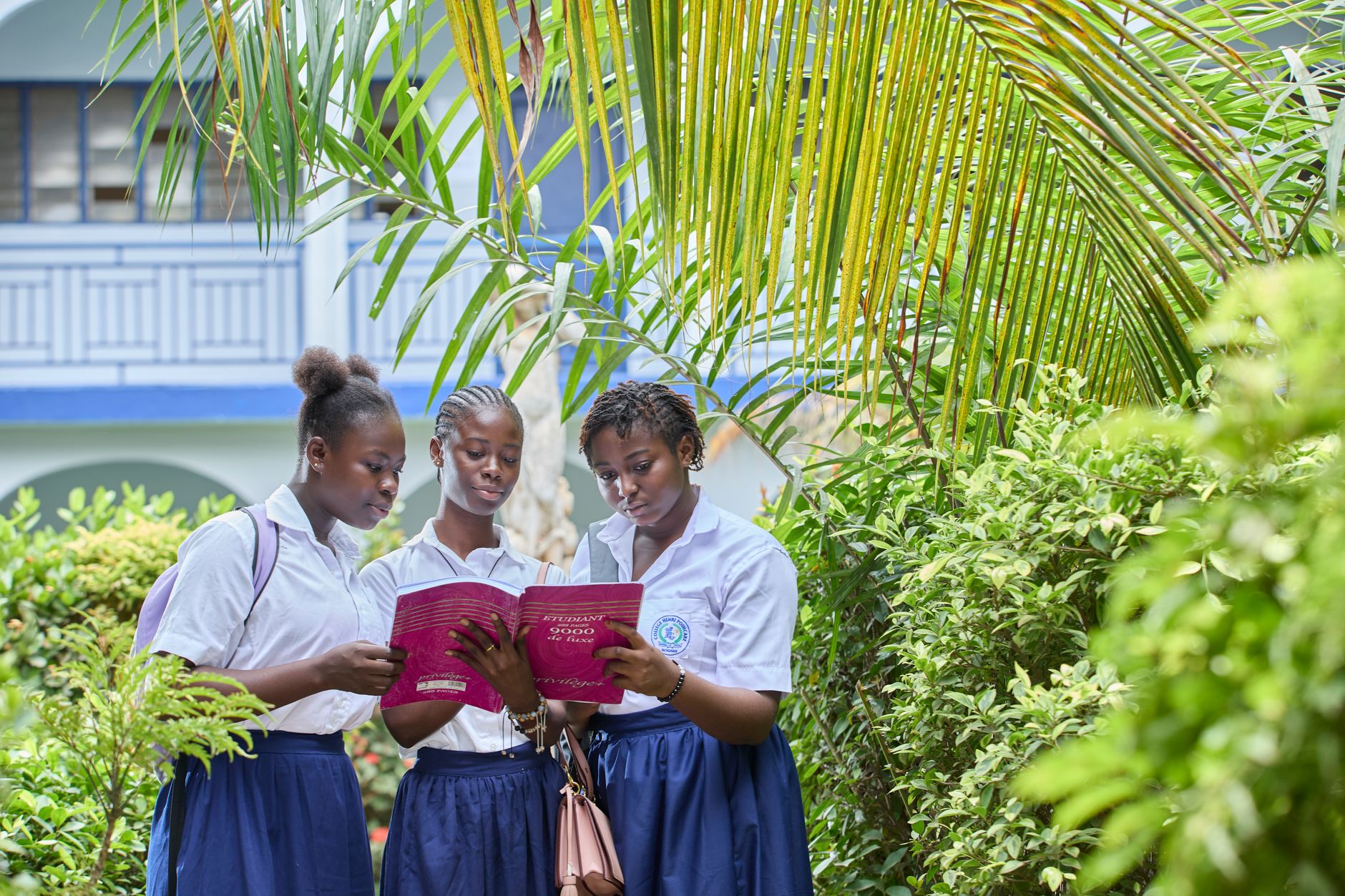
Understanding the structure of each program is essential before making a decision, because the day-to-day experience of an IB student and an AP student can be dramatically different.
The IB Diploma Programme locks students into a prescribed framework. They must choose one subject from each of six groups: Language and Literature, Language Acquisition, Individuals and Societies, Sciences, Mathematics, and the Arts (or an additional subject from another group). Three subjects are taken at Higher Level (HL) and three at Standard Level (SL). On top of coursework, students write a 4,000-word Extended Essay on a topic of their choosing, take TOK (which asks big philosophical questions about the nature of knowledge), and log CAS hours. Final grades combine internal assessments — essays, lab reports, oral exams — with external IB examinations written in May of Grade 12.
AP courses, by contrast, are self-contained. A student might take AP Chemistry in Grade 10, AP English Language in Grade 11, and AP Economics in Grade 12, with no requirement to take any particular combination. The only assessment that matters for university credit is the AP exam in May, scored out of 5. Schools may also offer AP Capstone, a two-course sequence (AP Seminar and AP Research) that culminates in an AP Capstone Diploma — the closest AP equivalent to the IB's holistic approach.
For students who are intensely passionate about two or three subjects but less enthusiastic about others, AP's flexibility is a genuine advantage. For students who benefit from structure, interdisciplinary thinking, and a cohesive academic identity, the IB framework tends to produce remarkable results.
To help you visualize the differences clearly, here is a detailed comparison across the dimensions that matter most to Canadian families:
| Feature | IB Diploma Programme | Advanced Placement (AP) |
|---|---|---|
| Structure | Cohesive 2-year diploma program | Individual courses taken à la carte |
| Duration | Grades 11–12 (mandatory 2 years) | Grades 10–12 (flexible timing) |
| Assessment | Internal assessments + external IB exams + Extended Essay + TOK | Standardized AP exam (1–5 scale) per course |
| Core Requirements | Extended Essay, Theory of Knowledge, CAS | None (unless AP Capstone) |
| Number of Subjects | Exactly 6 (3 HL, 3 SL) | Student's choice (1 to 10+ courses) |
| Grading Scale | 1–7 per subject; 45 points maximum | 1–5 per exam |
| University Credit | Often granted as block credit or advanced standing | Credit granted per exam score (usually 4 or 5) |
| Canadian University Recognition | Widely recognized; bonus points at many universities | Widely recognized; credit varies by institution |
| Global Recognition | Accepted in 159 countries | Strongest in North America |
| Typical Workload | Very high; estimated 150+ hours per subject | High per course; student controls total load |
| Philosophy | Holistic, internationally minded education | Academic acceleration and subject mastery |
| Cost (private schools) | Included in tuition; avg. $23,372/yr | Often included in tuition; exam fees ~$150 CAD each |

This is the question Canadian parents ask most often — and the answer is more nuanced than a simple preference for one program over the other.
Canadian universities recognize and value both programs, but they interact with them differently. The University of Toronto, University of British Columbia, McGill University, and University of Alberta all have specific IB admission policies that grant advanced standing or first-year course exemptions for strong IB scores. At U of T, for example, students who achieve a full IB Diploma with strong HL scores may receive up to 1.0 full-course equivalents in credit — a meaningful head start. UBC similarly offers advanced placement (not to be confused with the AP program) to IB Diploma holders.
For AP, universities grant credit on a course-by-course basis. A score of 4 or 5 on an AP exam typically earns one semester of university credit at most Canadian institutions, though policies vary significantly by faculty and province. Ontario universities tend to be more generous with AP credit than some institutions in Quebec, where the CÉGEP system already provides a pre-university academic layer that reduces the urgency of AP acceleration.
One important insight: Canadian university admissions officers are generally more familiar with IB than AP, simply because IB has been offered in Canadian schools for decades and has a well-established grading standard. AP is sometimes viewed as an American-centric credential, though this perception is shifting as more Canadian private schools expand their AP offerings. If your child has ambitions to study in the United States, AP may carry slightly more weight in that context — though top American universities also deeply respect the IB Diploma.
"For students aiming at competitive Canadian programs in medicine, law, or engineering, a strong IB Diploma score signals not just academic ability but the capacity to manage complexity, write at length, and think across disciplines — skills that matter enormously at the university level."
Private schools offering IB or AP programs in Canada charge an average annual tuition of $23,372 CAD, according to NextSchool data — though the range is extraordinarily wide, from under $1,000 at some subsidized institutions to over $183,000 at elite boarding schools. The program itself (IB or AP) is typically bundled into tuition, but families should be aware of additional costs.
For IB, registration and examination fees are paid to the IBO by the school and often passed on to families — expect to budget approximately $3,000–$5,000 CAD in exam and registration fees over the two-year diploma, in addition to tuition. For AP, each exam costs approximately $150 CAD, and students writing five or six AP exams in a year may spend $750–$900 on exams alone.
Geographically, access to these programs is concentrated in major urban centres. Based on NextSchool's data, Toronto leads with 26 schools offering advanced academic programs, followed by Mississauga (7 schools), Richmond Hill (6 schools), Vancouver (6 schools), and Brampton (5 schools). Families in smaller cities or rural areas may find their options limited to one program type — or may need to consider boarding schools or online delivery.
Some of the most sought-after private schools in Canada offer both IB and AP, allowing students to mix and match or transition between programs. These dual-program schools are particularly valuable for families who are uncertain which path suits their child, or whose children have both specialized academic strengths and a desire for holistic development. When evaluating a school, ask specifically whether they offer the full IB Diploma Programme or only individual IB courses (like MYP), and whether their AP pass rates and average scores are publicly available.

Beyond program structure and university recognition, the most important question is temperamental: what kind of learner is your child?
Students who tend to thrive in IB are those who enjoy connecting ideas across subjects, who are comfortable with ambiguity and open-ended inquiry, and who can sustain effort over a long project like the Extended Essay. IB students need to be organized — the combination of internal assessments, TOK presentations, CAS logging, and exam preparation is genuinely demanding. Students who are intrinsically motivated, globally curious, and enjoy discussion-based learning often describe the IB as transformative. The program is particularly well-suited to students who haven't yet decided on a university major, because it keeps multiple disciplines alive simultaneously.
Students who tend to thrive in AP are those with strong, clear academic passions who want to go deep in specific areas. A student who is certain they want to study computer science and mathematics may prefer loading up on AP Calculus BC, AP Statistics, and AP Computer Science A rather than spending equal energy on language acquisition and arts. AP also suits students who are highly self-directed and prefer the clarity of a single standardized exam over the ongoing demands of internal assessment. Athletes, performers, and students with significant extracurricular commitments sometimes find AP's flexibility easier to manage.
Here are some practical questions to ask when deciding:
Canada's private school landscape varies significantly by province, and so does the availability of IB and AP programs. Ontario has the highest concentration of both IB and AP schools, driven by the density of private schools in the Greater Toronto Area — including Toronto itself (26 schools), Mississauga, Brampton, and Richmond Hill. The province's competitive university admissions environment has made advanced programs nearly standard at top-tier private schools.
British Columbia has a strong IB tradition, with Vancouver's private schools frequently appearing on lists of top IB schools in North America. The province's Ministry of Education has a long-standing relationship with the IBO, and many BC public schools also offer IB — making it a familiar credential for university admissions offices at UBC and SFU. Vancouver's 6 advanced-program private schools represent only a fraction of the IB options available when public schools are included.
Alberta has seen significant growth in both IB and AP offerings, particularly in Calgary (69 schools in the broader private school category) and Edmonton (34 schools). Alberta's strong emphasis on academic outcomes and parental choice in education has created fertile ground for advanced programs. Quebec presents a unique case: the CÉGEP system means students enter university after completing two years of pre-university college, which affects how AP and IB credits translate. Quebec families considering IB or AP should consult directly with their target universities about how credits will be applied.
Use our school directory to browse all schools, compare programs, and create your shortlist. Our AI consultant is here to guide you through the process.
With 308 schools in our database offering advanced academic programs and detailed profiles for each, NextSchool is the most comprehensive tool available to Canadian parents navigating this decision. Our school directory lets you filter by program type (IB, AP, or both), city, tuition range, and grade level — so you can quickly identify which schools in your area offer the specific program your child needs.
For families in the GTA, our IB schools in Toronto listing includes detailed profiles with tuition, program details, and contact information for all 26 qualifying schools. You can compare schools side by side, read parent insights, and connect directly with admissions offices. Whether you're in Vancouver weighing IB options, in Calgary exploring AP, or in a smaller city trying to understand what's available within a reasonable commute, NextSchool's data makes the search faster and far less overwhelming.
The decision between IB and AP is ultimately a deeply personal one — shaped by your child's strengths, your family's values, your budget, and the quality of the schools available to you. Both programs have produced exceptional university graduates, Rhodes Scholars, and successful professionals. What matters most is finding a school where your child will be challenged, supported, and genuinely excited to learn.
Ready to take the next step?
Talk to our AI consultant — personalized school recommendations in minutes.
Get our free school guide
Tips on tuition, admissions timelines, and what to ask on school tours. No spam.
Confused about whether a single-sex or co-ed private school is right for your child? This guide breaks down the real differences, outcomes, and what Canadian parents should know before making this big decision.
Discover everything you need to know about boarding schools in Canada — from how they work and what they cost to where to find them and whether they're the right fit for your child.
Weighing private school against public school for your child? This comprehensive Canadian guide breaks down the real differences in cost, curriculum, class size, and outcomes — so you can make the most informed decision for your family.
